
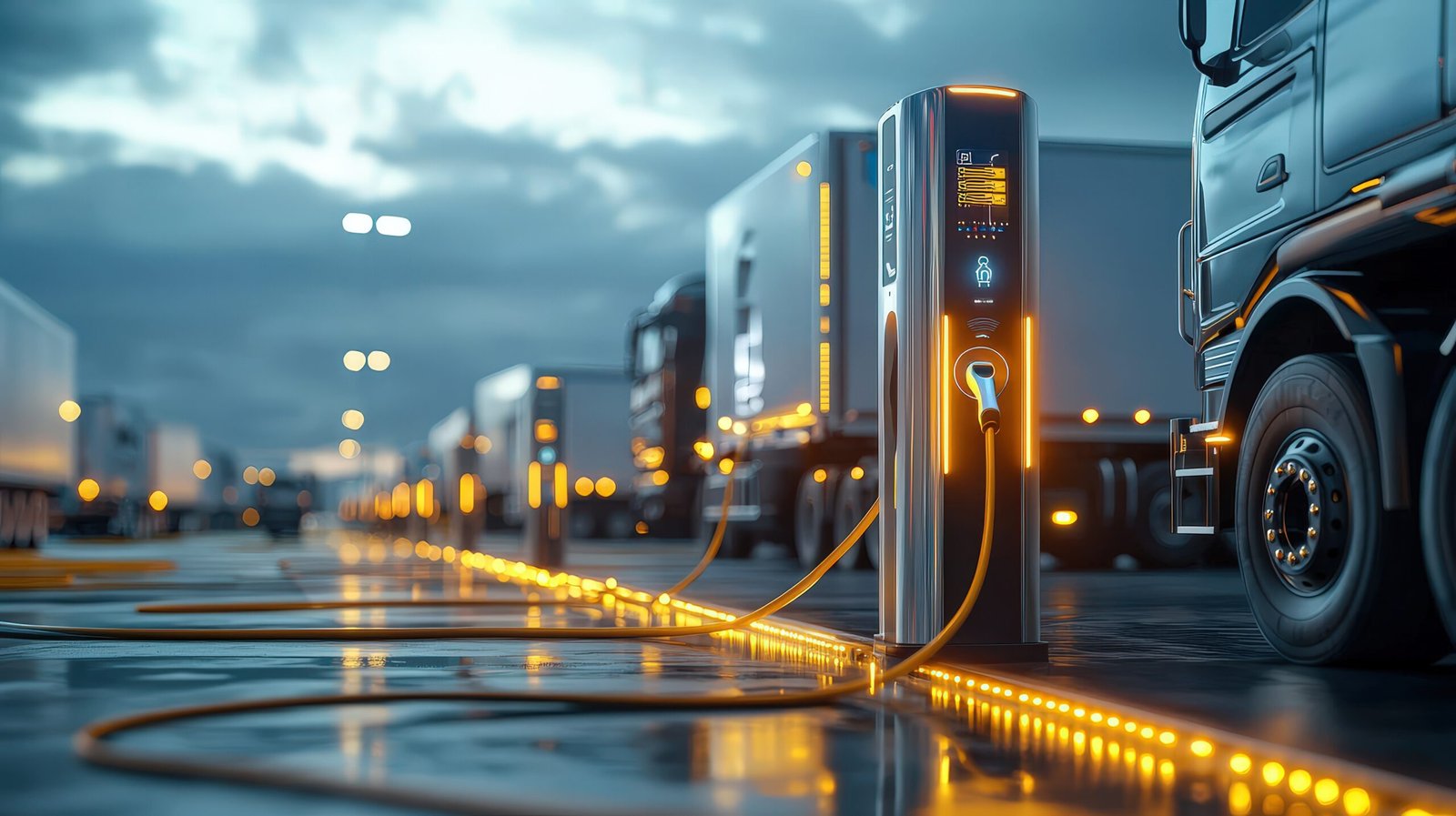
As the transport sector shifts toward decarbonisation, electric heavy goods vehicles (eHGVs) are becoming a core part of the solution. But while the EV market for passenger vehicles has matured significantly, charging infrastructure for eHGVs remains in its infancy—and the road ahead is both challenging and full of potential.
“The Unseen Hurdles For Commercial Vehicles Are Very High”Every commercial vehicle manufacturer
The Stakes Are High
Freight transport is responsible for a large chunk of road emissions. Electrifying HGV fleets could massively reduce urban pollution and help meet national net-zero targets. However, eHGVs have very different requirements from standard EVs:
-
Massive battery capacities (300–1000+ kWh)
-
High charging power demands (350kW–1MW+)
-
Strict depot turnaround times
-
Unpredictable route and location constraints
- Unpredictable Energy Costs

Key Challenges in eHGV Charging
⚡ 1. Grid Capacity and Infrastructure
Most depots are not equipped to deliver the kind of consistent, high-power energy eHGVs require. In many cases, grid upgrades cost millions and take years, especially in rural or industrial zones.
🚚 2. Vehicle Downtime and Charging Speed
Time is money in logistics. Long charging sessions aren’t feasible when vehicles are on tight schedules. Ultra-fast DC charging is essential, but brings its own infrastructure challenges.
🛣 3. On-the-Road Charging Scarcity
Unlike cars, eHGVs can’t rely on the existing public charging network—it’s not built for them. The lack of dedicated roadside megawatt charging stations is a major bottleneck for long-haul electrification.
💷 4. Cost and Business Model Alignment
Fleet operators are under pressure to electrify—but without predictable ROI, adoption stalls. CAPEX for charging hardware, plus uncertain energy pricing, is holding back investment.
Innovation: The Way Forward
🔋 Battery Energy Storage Systems (BESS)
Using modular battery systems to supplement or even replace direct grid power enables fast charging without massive grid upgrades. These can be installed quickly and powered via renewables or off-peak tariffs.
⚡ Megawatt Charging Systems (MCS)
The industry is developing 1+ MW charging standards, enabling eHGVs to charge in under an hour. These systems are expected to roll out commercially between 2025–2027.
🌐 Smart Energy Management (EMS)
Advanced EMS platforms can optimise energy flows, manage load balancing across depots, and reduce peak demand charges—essential for sustainable scaling.
🧠 Telematics-Driven Charging
By integrating vehicle telematics, charging schedules can align with real-time fleet usage, ensuring chargers are used efficiently and vehicles are always ready.
🧱 Modular Charging Hubs
Future charging sites will likely use prefabricated, containerised units combining BESS, solar, and high-speed DC chargers—scalable and relocatable to match fleet needs.
Grid Today’s Approach
At Grid Today, we’re designing and deploying grid-independent, high-powered charging systems tailored specifically for eHGVs and fleet operations. Our modular BESS units, paired with smart EMS and DC fast chargers, deliver:
-
Up to 1MW peak power without local grid dependency
-
Deployment-ready systems in 8–12 weeks
-
Lower lifetime energy costs through renewable integration
-
Scalable infrastructure that grows with your fleet
Whether you’re electrifying one depot or rolling out nationwide, we build solutions that match your business—not the other way around.
Final Thoughts
The future of eHGV charging is fast, smart, and decentralised. The sector is evolving rapidly, and those who invest early in flexible, grid-independent solutions will gain a lasting edge in logistics, sustainability, and cost-efficiency.
Final Thoughts
Grid-independent charging isn’t just the future—it’s already here. As demand for EV infrastructure grows, businesses, governments, and developers must embrace new models that prioritise speed, sustainability, and resilience.
At GridUnlock, we’re building that future today.
Want to explore future-ready eHGV charging?
Talk to Grid Today about scalable, modular energy systems designed for the demands of heavy transport.